George
N. Potter
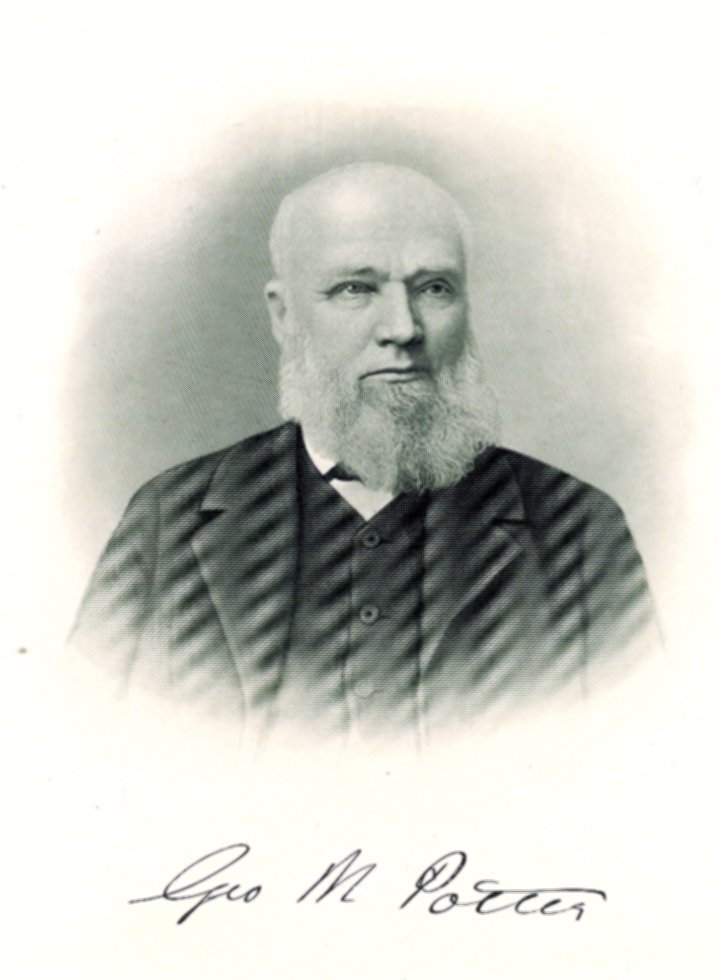 George N. Potter wrote his name large on the
history of Eaton County, where his memory is honored by all who knew him or are
familiar with his worthy career as a loyal, progressive and public spirited
citizen and man of affairs. As has been written concerning him. With no
advantages of birth or education to advance his career, he utilized the gifts
with which nature endowed him and made himself a strong influence in the
commercial and financial world. Mr. Potter was born in Ira, Cayuga County, New
York, October 16, 1827, being a son of Linus and Diana (Phelps)
Potter, the
former native of Pennsylvania and the latter of Cayuga County, New York. When he
was but three years of age, in 1830, his parents cast in their lot with the
pioneers of Michigan, and during much of the journey he was transported by being
strapped on his fathers back. The family located in Saline, Washtenaw County, in
which little hamlet the father erected the first frame house. It has been deemed
consonant to here quote, with but slight change in phraseology, from a sketch
previously published concerning the honored subject of this memoir: the family
passed fourteen years at Saline, but financial reverses then became their
portion and they again became pioneer, invading the forests of Eaton county. The
household now consisted of parents and seven children. A shanty of logs was
erected, with a roof of troughs and a puncheon floor, neither nails nor boards
having been used. The site was that now occupied by the village of Potterville.
The father died July 26, 1846, leaving George N., at the age of eighteen years,
to care for the family. His only educational advantages embraced a season of
three months in school at Vermontville, and during this period he paid for his
board by chopping ten acres of woodland. This not having been deemed sufficient
pay by the rapacious host, he returned and assisted in hoeing corn for a week in
the following summer. With thirty-five dollars given him by his mother as a
reward for his fidelity to the family and fifteen dollars earned by himself, he
soon afterward departed to locate forty acres of land, which he had previously
pre-empted. The government refused the paper money tendered by him, gold being
demanded. Not having a surplus with which to effect the exchange he was greatly
dismayed, but a kind friend, in the person of Judge McQueen, of Eaton Rapids,
exchanged the paper for gold and paid a high compliment to the honesty of the
young man by being willing to wait for the difference until he was able to pay
the same. Mr. Potter was from that them a landowner, though not yet twenty years
of age. Upon his land he erected a comfortable house of logs, and March 1, 1849,
recorded his marriage to Miss Martha L. Gladding, formerly of St. Lawrence
County, New York. In 1856 Mr. Potter was elected sheriff of Eaton County,
retaining this office four successive years, and in 1862 he was appointed deputy
provost marshal, in which position he served during the continuance of the war
of the Rebellion. He soon afterward became an extensive landowner, and
introduced into the county the first circular saw. Mr. Potter�s energies were
now directed to the construction of a railroad through the county. He was one of
the projectors of the Grand River Railroad and one of the original thirteen
capitalists who promoted the Peninsular Railroad, now a portion of the Grand
Trunk system, and he was a director of the original company. The inception and
upbuilding of the village of Potterville represent the tangible results of his
energy and liberality. He first erected a sawmill and later a stave and heading
factory. Then followed a brick block, including a spacious hotel. A flourmill
was next erected, and still later he built and equipped a factory for the
manufacture of bedsteads. In these various enterprises he was intimately
associated with his younger brother, James W. His first wife died in 1869, and
in 1870 he wedded Miss Mary A. Page, who was born in St. Lawrence County, New
York. Mr. Potter was a Republican in politics; was indefatigable in his efforts,
had a wonderful mental grasp and executive ability, and he made himself a factor
of importance in the business, civic and social life of the community, while no
man in the county was better known or more highly respected. His record offers
both lesson and incentive, for he marked the years with worthy deeds and left
the heritage of an unspotted name. He passed away November 1, 1902, his second
wife having died in June of the preceding year.
George N. Potter wrote his name large on the
history of Eaton County, where his memory is honored by all who knew him or are
familiar with his worthy career as a loyal, progressive and public spirited
citizen and man of affairs. As has been written concerning him. With no
advantages of birth or education to advance his career, he utilized the gifts
with which nature endowed him and made himself a strong influence in the
commercial and financial world. Mr. Potter was born in Ira, Cayuga County, New
York, October 16, 1827, being a son of Linus and Diana (Phelps)
Potter, the
former native of Pennsylvania and the latter of Cayuga County, New York. When he
was but three years of age, in 1830, his parents cast in their lot with the
pioneers of Michigan, and during much of the journey he was transported by being
strapped on his fathers back. The family located in Saline, Washtenaw County, in
which little hamlet the father erected the first frame house. It has been deemed
consonant to here quote, with but slight change in phraseology, from a sketch
previously published concerning the honored subject of this memoir: the family
passed fourteen years at Saline, but financial reverses then became their
portion and they again became pioneer, invading the forests of Eaton county. The
household now consisted of parents and seven children. A shanty of logs was
erected, with a roof of troughs and a puncheon floor, neither nails nor boards
having been used. The site was that now occupied by the village of Potterville.
The father died July 26, 1846, leaving George N., at the age of eighteen years,
to care for the family. His only educational advantages embraced a season of
three months in school at Vermontville, and during this period he paid for his
board by chopping ten acres of woodland. This not having been deemed sufficient
pay by the rapacious host, he returned and assisted in hoeing corn for a week in
the following summer. With thirty-five dollars given him by his mother as a
reward for his fidelity to the family and fifteen dollars earned by himself, he
soon afterward departed to locate forty acres of land, which he had previously
pre-empted. The government refused the paper money tendered by him, gold being
demanded. Not having a surplus with which to effect the exchange he was greatly
dismayed, but a kind friend, in the person of Judge McQueen, of Eaton Rapids,
exchanged the paper for gold and paid a high compliment to the honesty of the
young man by being willing to wait for the difference until he was able to pay
the same. Mr. Potter was from that them a landowner, though not yet twenty years
of age. Upon his land he erected a comfortable house of logs, and March 1, 1849,
recorded his marriage to Miss Martha L. Gladding, formerly of St. Lawrence
County, New York. In 1856 Mr. Potter was elected sheriff of Eaton County,
retaining this office four successive years, and in 1862 he was appointed deputy
provost marshal, in which position he served during the continuance of the war
of the Rebellion. He soon afterward became an extensive landowner, and
introduced into the county the first circular saw. Mr. Potter�s energies were
now directed to the construction of a railroad through the county. He was one of
the projectors of the Grand River Railroad and one of the original thirteen
capitalists who promoted the Peninsular Railroad, now a portion of the Grand
Trunk system, and he was a director of the original company. The inception and
upbuilding of the village of Potterville represent the tangible results of his
energy and liberality. He first erected a sawmill and later a stave and heading
factory. Then followed a brick block, including a spacious hotel. A flourmill
was next erected, and still later he built and equipped a factory for the
manufacture of bedsteads. In these various enterprises he was intimately
associated with his younger brother, James W. His first wife died in 1869, and
in 1870 he wedded Miss Mary A. Page, who was born in St. Lawrence County, New
York. Mr. Potter was a Republican in politics; was indefatigable in his efforts,
had a wonderful mental grasp and executive ability, and he made himself a factor
of importance in the business, civic and social life of the community, while no
man in the county was better known or more highly respected. His record offers
both lesson and incentive, for he marked the years with worthy deeds and left
the heritage of an unspotted name. He passed away November 1, 1902, his second
wife having died in June of the preceding year.
Past
& Present of Eaton County - Page 495 - 496
Return to the
MIGenWeb Eaton County
Table
of Contents Pioneer
Families